
Sex Dust
The ancient aquatic biology that irritates your sinuses and paints the world yellow

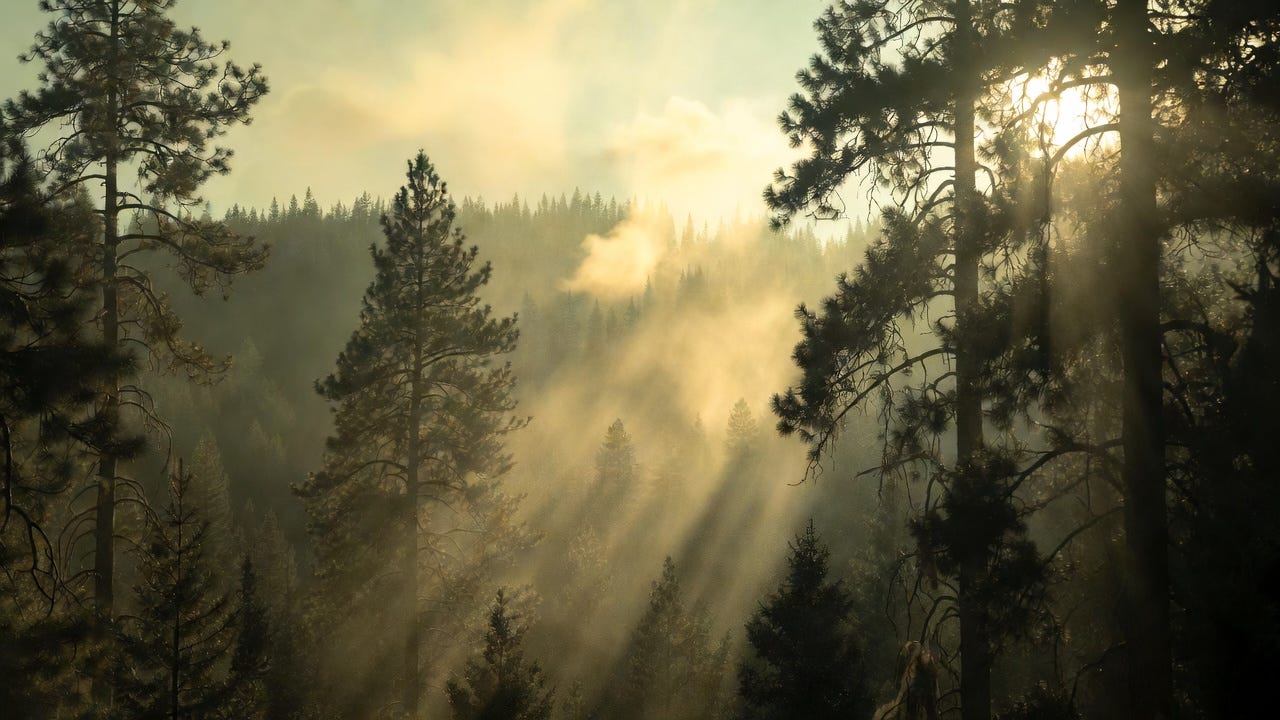
My immune system has decided that Lodgepole Pine semen is an existential threat.
Every year at about this time, our forest reminds me that it’s full of perverts. Trees and grasses alike flip on the Barry White and engage in a group sex act so profoundly gargantuan that it can be seen on weather radar.
Their Bacchic mess winds up everywhere. For about a month every spring, a film of plant sperm covers our corner of Montana, sending my body into a tailspin of histaminic rage.
Time to know thine enemy. Pollen.
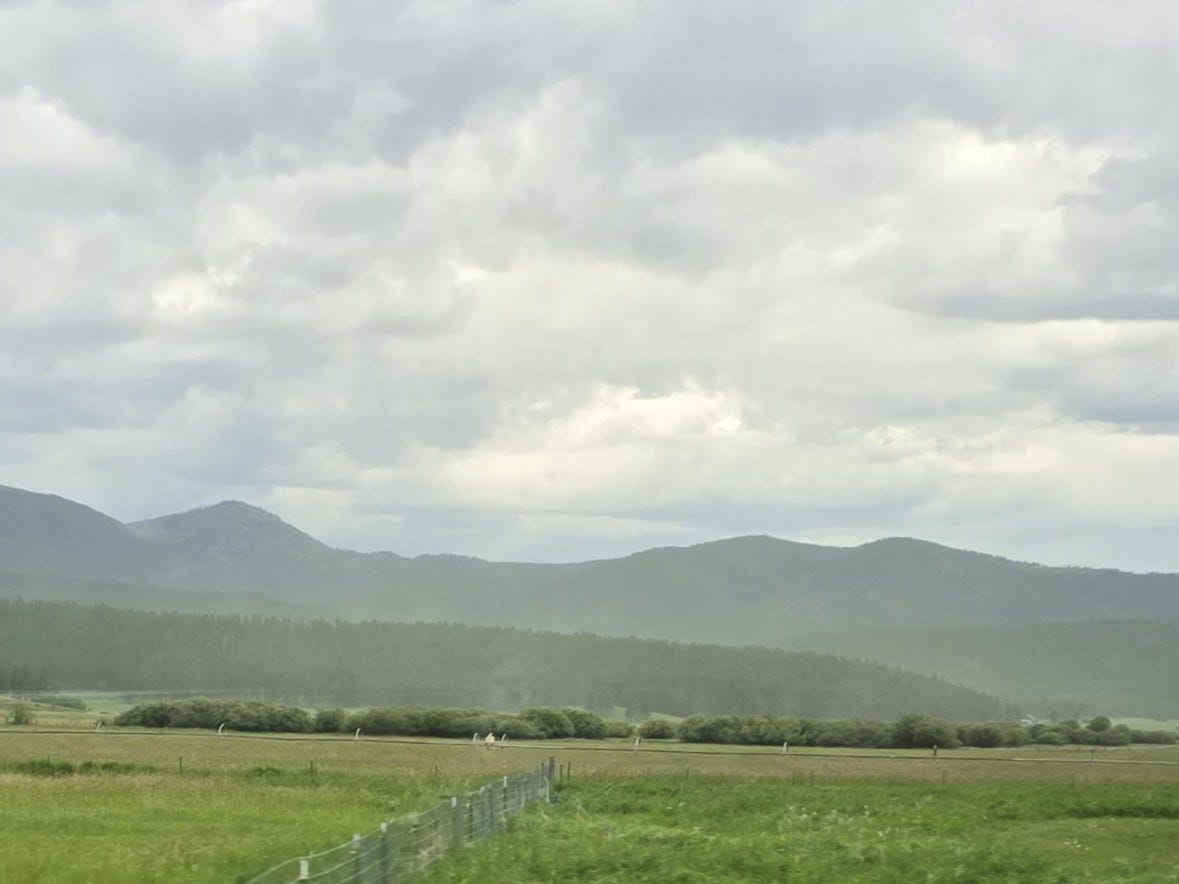
It’s everywhere because it has to be everywhere. Plants can’t walk.
It’s a big engineering challenge: project your biological presence into the environment because you’re literally rooted to the ground. That’s hard. The air is a hostile place.
It’s not a new problem. It’s as old as reproduction itself. Two organisms need to swap DNA and make a new organism.
Animals and other motile critters have it easy. They mostly put their cells into each other. Simple enough.
Other organisms let the environment do the work. Release your reproductive cells and let them swim to or just drift into each other.
Fish and algae do it all the time. Broadcast spawning.
Plants do it, too. Liverworts send their sperm swimming through the water. But that tethers them to the water.
Introduce air as the broadcast medium and you’ve got much bigger problems.
After all, we and every cell in every living thing are essentially bags of seawater. The more extreme the environment, the more extraordinary the hoops.
You have to launch living cells into the atmosphere. Across a dry, oxidizing, UV ravaged sky. It has to survive and land in exactly the right place, despite having no control over where it goes.
So you have to make a lot of them, cheaply, and hope for the best. Floating cells. Disposable cells.
It isn’t dust. It’s alive.
Tiny packets of ocean chemistry, nearly indestructible and so numerous that they blanket continents and ruin springtimes for dermatologists.
Inside are living cells. Usually two. One becomes sperm. The other grows a tube. When pollen lands in the right place, the tube grows toward the egg. An aqueous channel, finally. The sperm does what sperm does, and voila.
Weird at the beginning, familiar at the end.
But for all the constraints, wind pollination has evolved over and over again. Pines, grasses, sedges, oaks.
All of them learned the trick, because they had access to the same ancient capsule material. Sporopollenin.
And it evolved long before plants conquered land, back when spores drifted and plant sperm still swam freely in open water.
One of the most chemically stable and poorly understood materials in biology, built into the shared history of everything that makes seeds.
So came pollen. An aquatic reproductive system, floating in the sky. A different kind of ocean, the same kind of solution.
There was no need to invent a better molecule, just a better package.
And so, Montana disappears beneath a haze of sex dust. The forest launches trillions of microscopic, armored gametophytes into the atmosphere and lets probability do the work.
My immune system calls this a crisis.
Evolution calls it one of the greatest engineering solutions life ever discovered.
Just don’t get me started on plants that trick insects into rolling around in their genitals. Yet.
Note: I’ve been reading When the Earth Was Green by Riley Black and it’s really got me thinking about plants. You should check it out.


It's about time someone called out the plant world for its blatant promiscuity!😅
HAHA! When my son was 9 years old, he and I went for a walk in late May. There were plumes of pollen swirling through the air. The sun was shining through it and you could track the fluid dynamics of the wind really clearly.
We paused to just look, both pretty amazed. Then, after a few silent beats, he said, "It's kinda weird that it's all sperm."