
The Cheapest Elevator on Earth
Why forests abruptly fail in the mountains

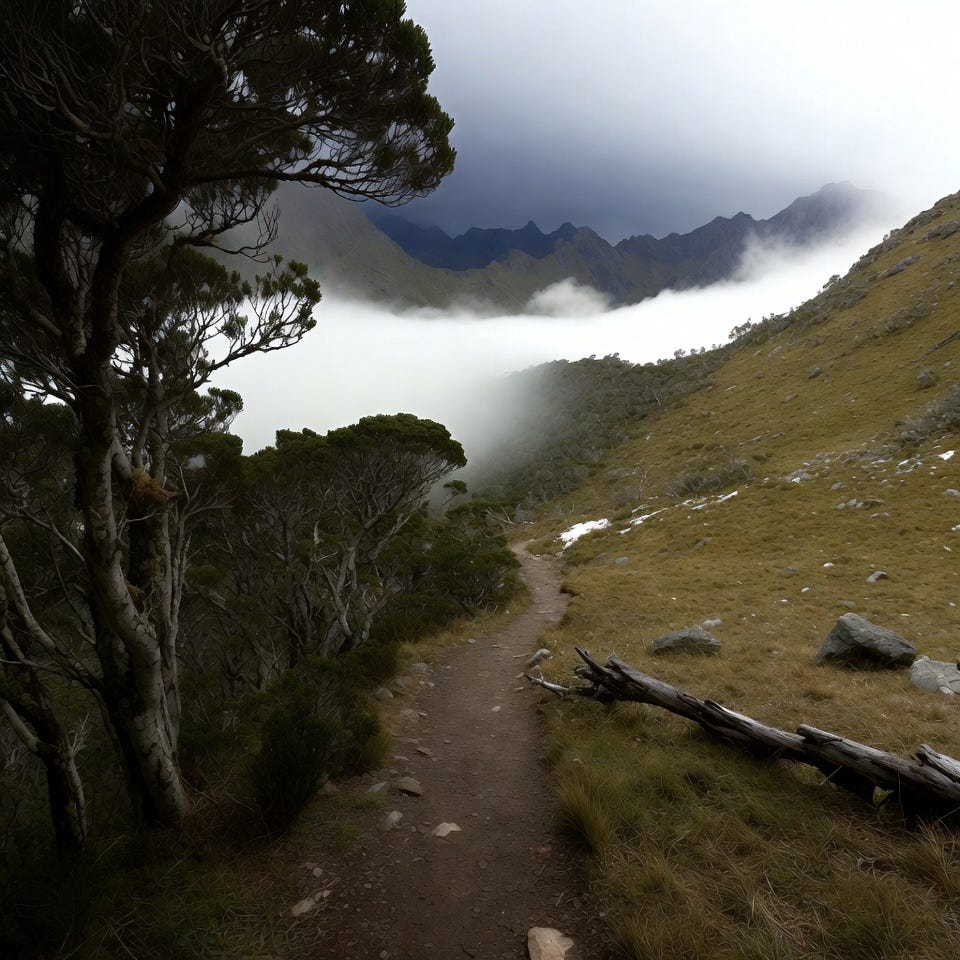
Day two in the Andes, and we walked an ecological knife edge.
Lush cloud forest abutted the downhill side of the Inca Trail—diversity bursting forth from ground to canopy. Epiphytic bromeliads, moss, and vines encased host trees heavy with foliage; bright flowers tailor-made for hummingbirds punctuated the understory. The world below us was a multidimensional wonderland.
We climbed out of that lushness and found ourselves walking the tree line in a long—and for me, painful—ascent to 13,800 feet. High above where trees grow, where vegetation collapses into shrubs and grass. Where the mountain—and your cardiovascular system—start telling you that you don’t belong.
But for a while, you straddle both worlds. Cloud forest on one side, scrubland on the other, all but touching—separated only by the width of the trail. An outstretched arm could dip into two different ecosystems. I stretched mine out, trying to feel the difference.
It felt the same to me.
So what gives?
Intuitively, the transition should be gentle. Trees should thin out, become fewer and farther between. Shrubs and grasses should slowly fill in the gaps. A gradual fading of flowers.
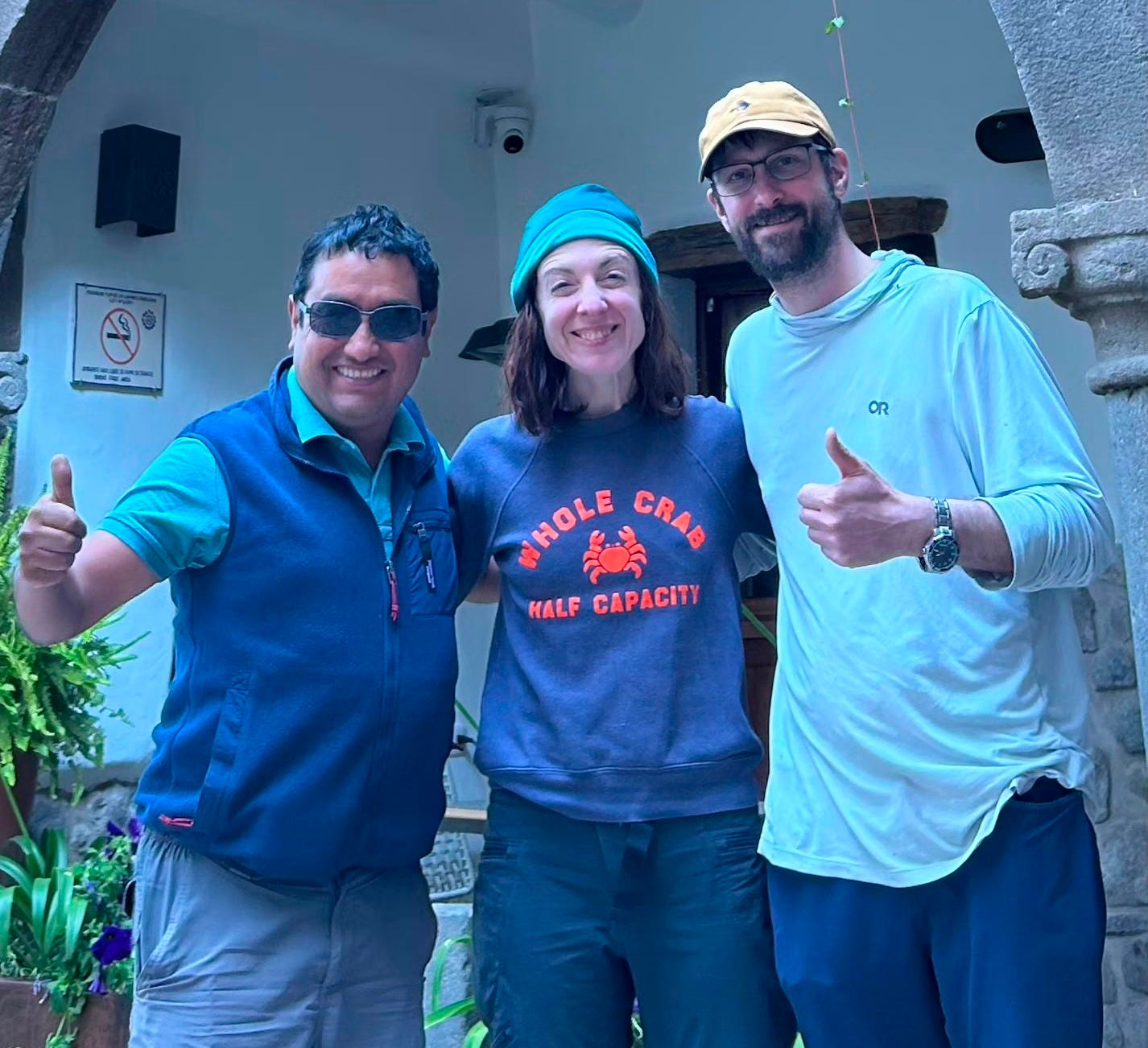
My first thought was deforestation. Surely people sharpened the boundary, creating the illusion of a hard edge. Not so. Erick, our encyclopedically competent guide from Enigma Peru, shook his head.
“It doesn’t thin,” he said.
“It ends all at once.”
Once it can no longer accommodate the rigors of altitude, the forest simply crashes. In medicine, we call this decompensation. Sometimes, the slack of a failing organ—say the heart—is temporarily taken up by others, like the lungs and kidneys. Everything looks stable, until the whole system collapses after passing an invisible tipping point.
And here, around 12,000 feet up in the Andes, you can walk along that tipping point.
At that altitude my heart struggled to pump oxygen to my brain and muscles. My legs and chest burned. The world swirled. I couldn’t cram enough air into my blood.
I had a plumbing problem.
It turns out trees get their own plumbing issues at these altitudes, too. They suck water all the way up their trunks using a tension system built on the same fragile attraction that allows water molecules to slurp up into a paper towel. Water evaporates out of the leaves. Hydrogen bonds draw more water upward through impossibly narrow tubes called xylem.
All trees do this because it’s the cheapest elevator on Earth. Water takes a free ride to the top of every tree on the planet, and evolution isn’t interested in inventing a paid system.
But the cheap system becomes the weak link.
Make even a tiny bubble in a tiny tube, and the last water molecule in line can’t reach the one below. The rope gets cut, and that ain’t good.
Xylem embolism.
High altitude makes bubbles easier to form—and harder to ignore.
Dissolved gas turns to bubbles more easily at these elevations, especially during nightly freezes. Meanwhile, lower pressure and stronger winds speed evaporation, pulling much harder on the water column. These trees lose water quickly.
For most trees this isn’t fatal. Only some vessels embolize, and trees can usually make enough energy to repair the damage. Others turn off their elevators in winter.
Compensation.
But cold weather slows growth, and energy budgets tighten in a way that makes the nightly freeze–thaw cycle become relentless. I could feel the air getting sucked out of my lungs on that trail, and the trees could feel it too.
That high up, trees can no longer earn enough energy to fix yesterday’s damage before tonight’s frost arrives. Instead of repair, injury compounds, hydraulic capacity collapses, and the tree dies.
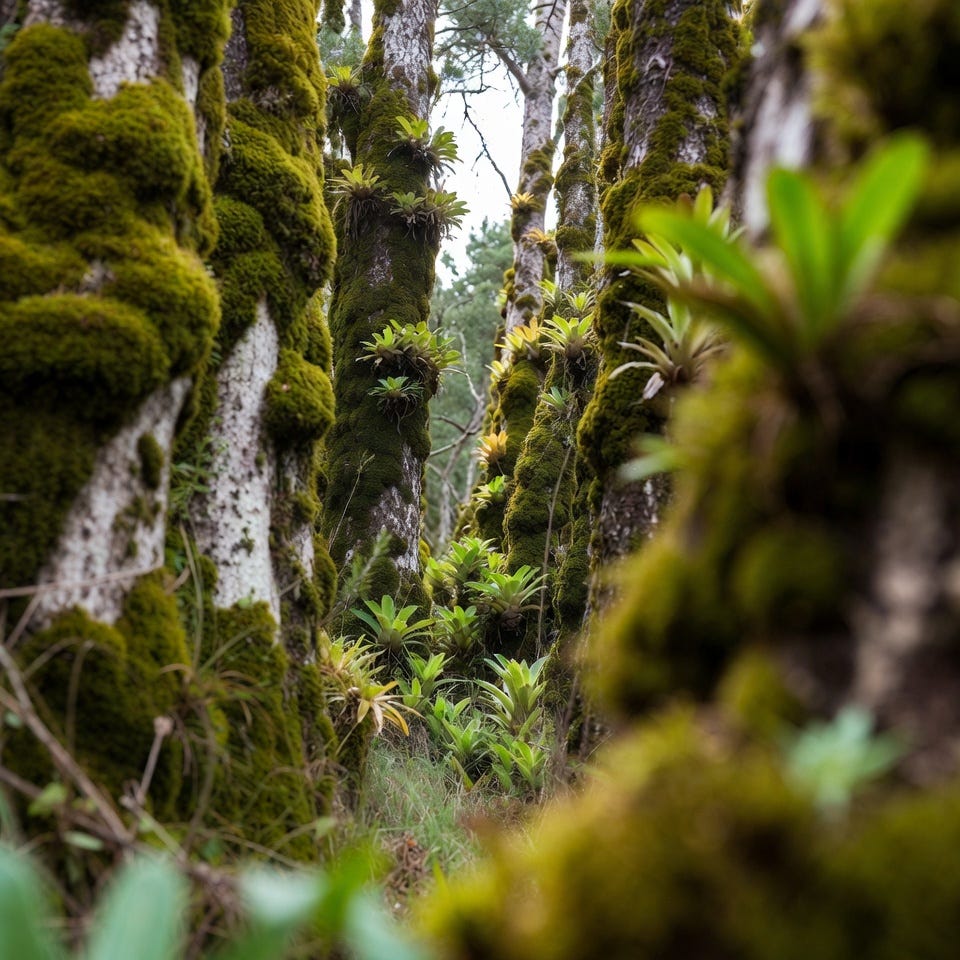
No trees means no epiphytes. No vines. No shaded understory. No flowers for absent hummingbirds. And no roots to hold fertile soil in place.
What remains is a cold, windy mountainside that loses soil as fast as it forms. Shrubs survive because they’re short, branchy, and hydraulically forgiving. Grasses fill the gaps.
High on the mountain, there really is a line the forest cannot cross—drawn not by people, but by the behavior of water under tension in cold, thin air.
Trees have no solution because they’ve built their world around a free elevator.
I had know idea about the xylem embolism! This was a great article. Thank you.
I like that you realize that your lungs and the Earth’s lungs face nature in the same way