
Why Aren't There More Animals?
How Earth wound up with millions of species, but surprisingly few kinds of animals.

I Dadded pretty hard this weekend, and it got me thinking about insects. And aliens.

Camping trip to Big Fork with the missus and our four-year-old unicorn addict. Lakeside wiener roast.
Pack the camper. Tires checked. Brake lights working. Sunscreen: you bet.
Wiener roast complete, we soaked in the sunset over the lake.
Mosquito. Another mosquito. And another.
Bug spray. Ugh, Dad fail. Screaming child, everyone inside.
As the hubbub subsided, I found a squished mosquito on my arm. Tiny. Delicate.
Ordinary.
Butterflies, bees, praying mantises, lice on your head. Wildly different, but all the same. Head, thorax, abdomen, six legs.
What gives?
We boast about an Earth awash in biodiversity, but something like a million insect species all hum the same basic tune. Stretch a wing, modify a leg, reshape a mouthpart. Solenopsis mcmullenbergensis.
Walk in the woods and it’s pretty much just insects and arachnids and millipedes.
Zoom out and the small stuff mostly has exoskeletons, and the big stuff mostly has backbones.
Beneath all the decorations lie only about three dozen surviving animal phyla, the deepest blueprints of the animal kingdom. Most of them are worms.
Why isn’t there more stuff?
Well, because sometimes bad things happen.
There used to be more stuff.
Life went bonkers during the Cambrian explosion. Animals made the leap from the tiny and undulating to the macroscopic and directional. New niches, new ways of living, new ways to bolt doodads onto worms.
Lots of them.
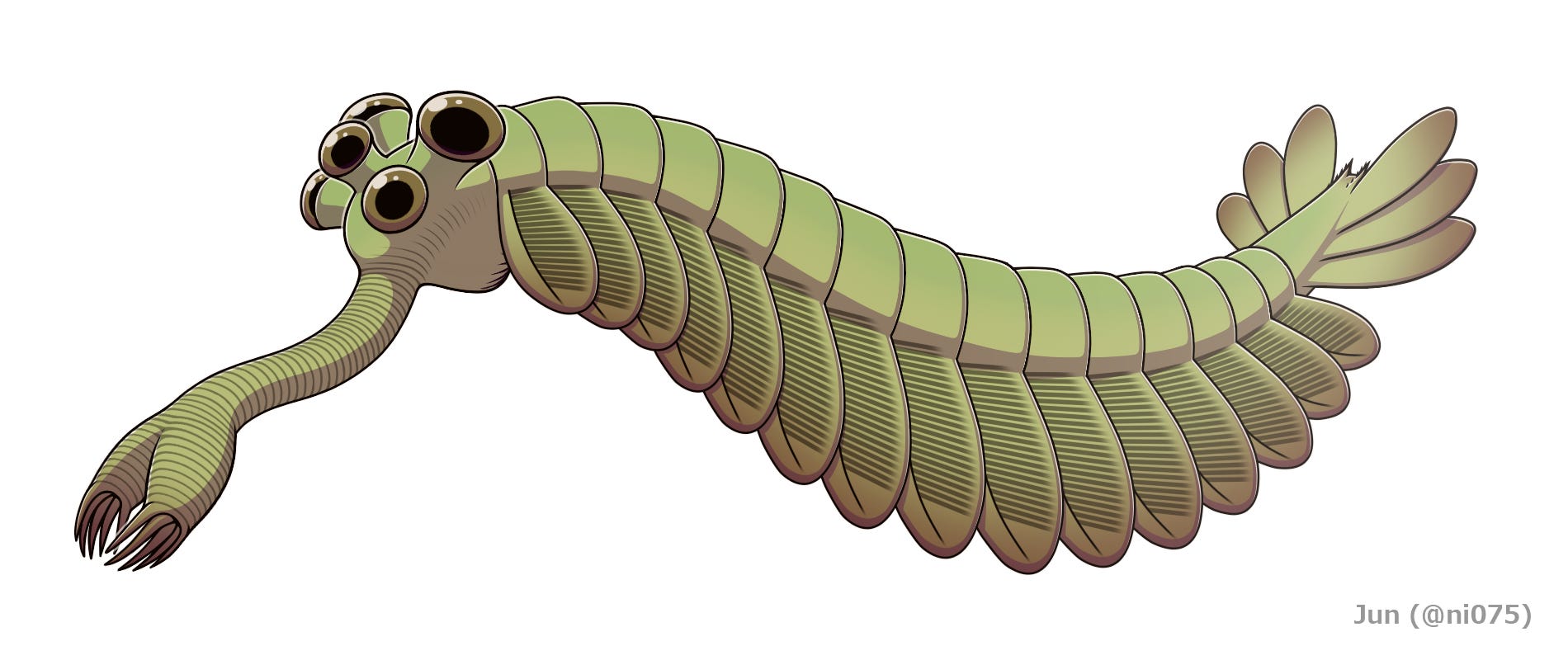
Diversity on a different scale. Not deciding how big and what color, but deciding things like what a mouth is and where it could go.
Then the bad thing. And another. And another.
A comet smashes. A mega-volcano erupts for a million years. The oceans lose their oxygen.
Tiny burrowing mammals survived the comet that killed the dinosaurs. Now we have giraffes.
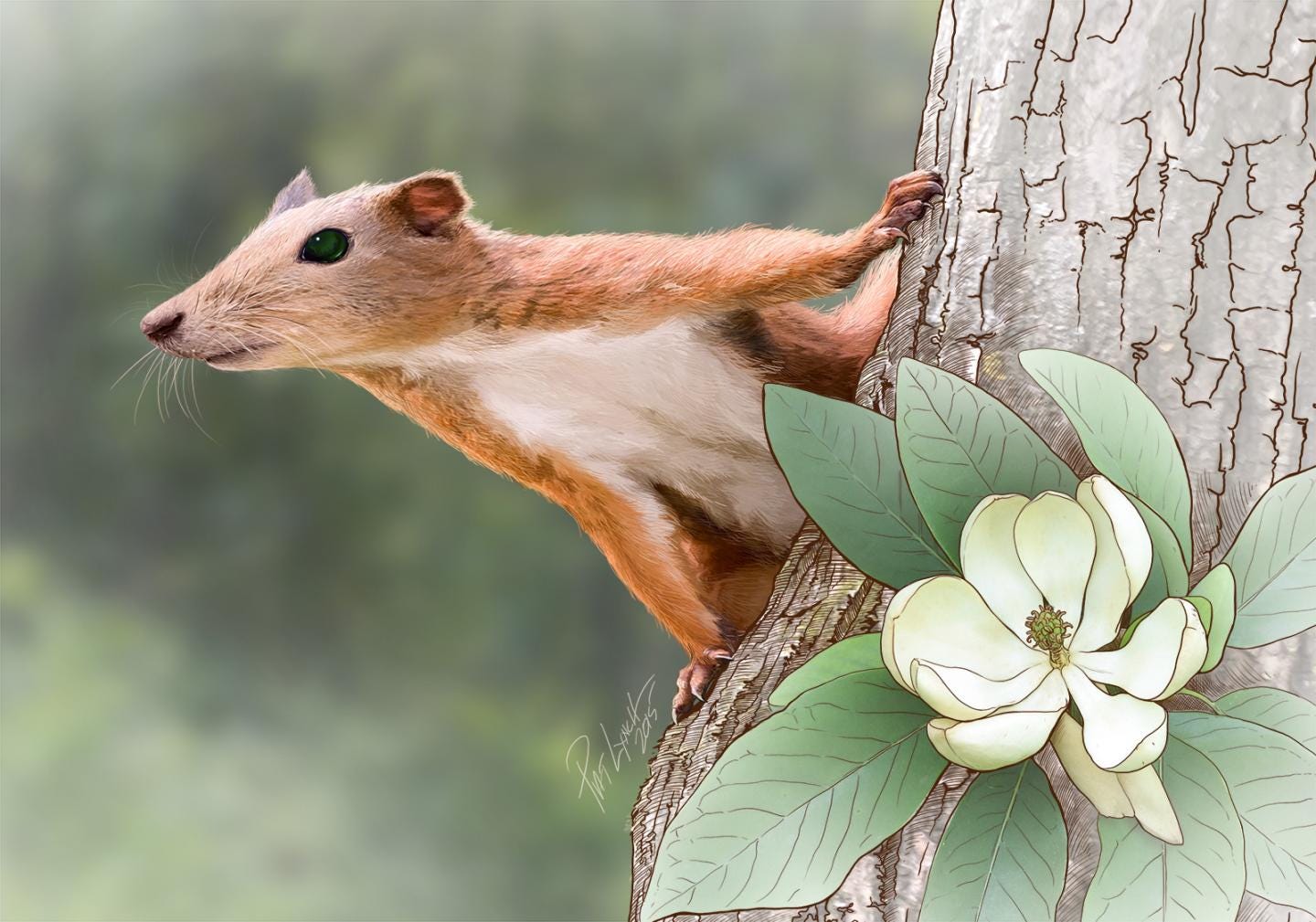
Cull 90% of all species and let the survivors repopulate. Then do it over and over. Diversity doesn’t disappear. It just gets rebuilt from survivors. Variations on themes.
Survivors might inherit a fresh Earth, but they don’t inherit fresh genetics. The big decisions about things like how to build a mouth were made long ago.
Once a body plan is set, it’s incredibly hard to rewrite the blueprint. You can change the wallpaper, but some walls are simply load-bearing. Evolution gets hemmed in by its own past.
Ostriches and hummingbirds. Lice and butterflies. Mice and people.
If Earth had a more boring geological history, maybe there we’d still have more of those early experiments. Maybe we’d think about biodiversity differently. Bottleneck after bottleneck led us to a diverse world, rebuilt by the few who survived.
An alien coming to Earth may marvel that there are only a few kinds of animals. So many arthropods. So many vertebrates.
Maybe someday cockroaches really will inherit the Earth. Then give them a hundred million years.
Millions of species. All suspiciously similar.
I looked back at the mosquito on my arm. Ordinary.


Very interesting perspective! I’m also curious if any of this results from “category error”. Beetles are one of the most diverse groups of insects, and perhaps there are more specific subsets we could separate Beetle into. Ultimately, categories are pathways to knowledge though, not knowledge itself. Thanks for this article!
Life emulates my writing. Making tons of templates and using them, flicking off the ones I don't like, optimizing the ones that remain, sometimes branching a new specialty template off of an existing one if I have a slightly specialized environment for it... until eventually there are only several body plans I make 95% of my content from.